
Dinosaur paleobiology and depositional environments of Dinosaur Provincial Park, UNESCO World Heritage Site
FT03 • 1 Day • Alberta
Dinosaur Provincial Park (DPP) is the largest area of badlands topography in Canada, was the first UNESCO World Heritage Site designated based on fossil material, and is globally recognized for its abundance of Late Cretaceous vertebrate fossils, especially dinosaurs. Due to the abundance and high-quality preservation of vertebrate fossils, DPP has historically been, and remains today, an epicenter of paleontological research. Participants will enjoy a day of hiking across outcrop of upper Belly River Group transgressive sequence (fluvial to estuarine) including the Oldman, Dinosaur Park and Bearpaw formations. The hike will take participants to historic and current paleontological sites, with a specific focus on different vertebrate taphonomic modes, including articulated skeletons, monodominant ceratopsian (horned dinosaur) bonebeds, multitaxic microvertebrate bonebeds, isolated bones, and possible dinosaur trackways, as well as paleobotanical sites. The history of collecting and research, vertebrate diversity and paleoecology, and changing ideas of dinosaur paleobiology in DPP will be covered.
Dinosaur Provincial Park is a two-hour drive from Calgary. Participants can expect to spend most of the day hiking over uneven terrain with no shade; appropriate footwear and sun protection are recommended. The field trip will be restricted to the hike, with no collecting involved.
Field Trip Leader
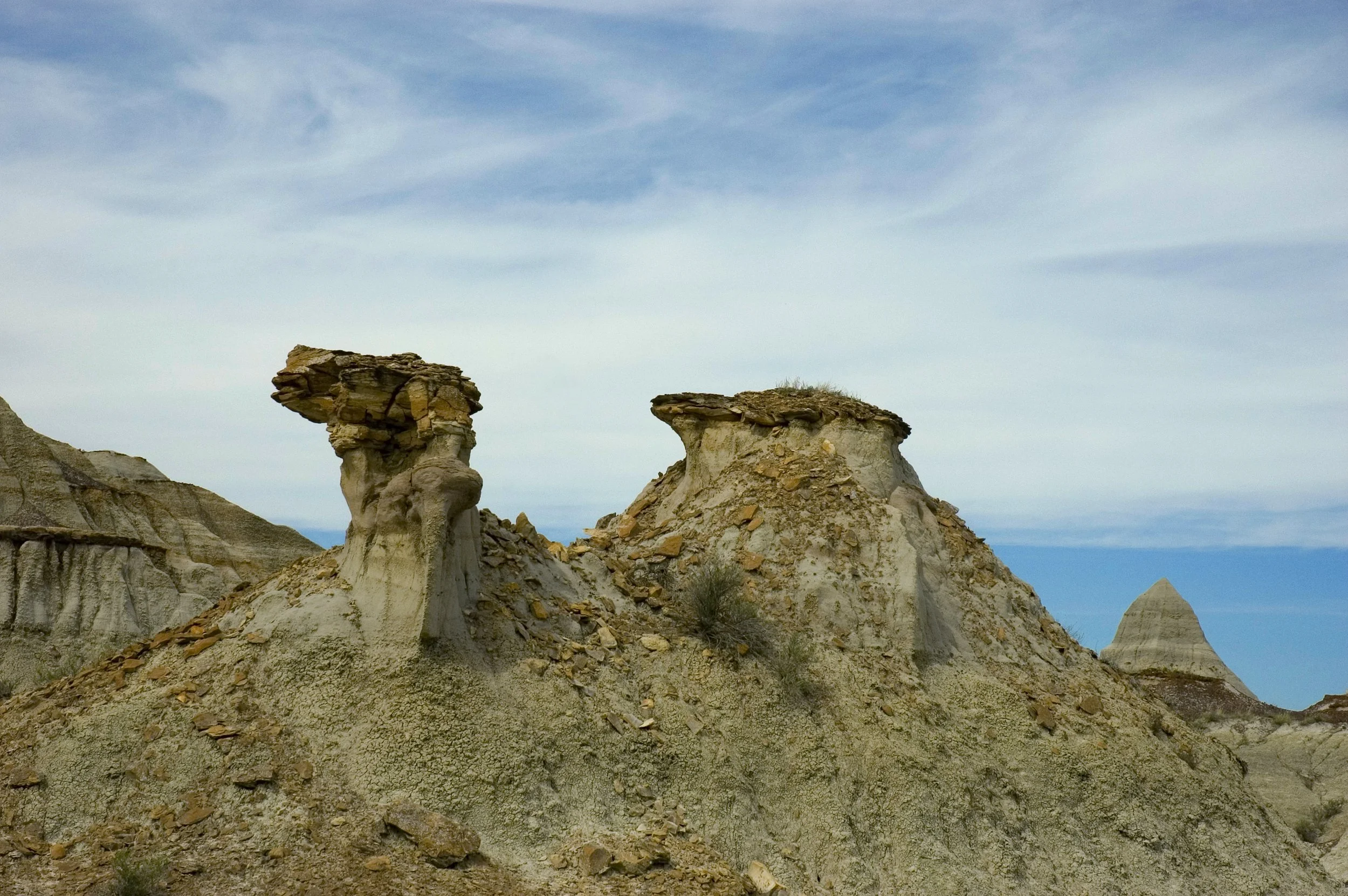
Dinosaur Provincial Park
Image credits: Royal Tyrell Museum
Dr. Craig Scott, Director, Preservation and Research, Royal Tyrrell Museum of Palaeontology
Dr. Caleb Brown, Curator of Dinosaur Systematics and Evolution, Royal Tyrrell Museum of Palaeontology
Dinosaur Provincial Park
Image credits: Royal Tyrell Museum