
Sedimentology, Unconformities, and Chronostratigraphic Boundaries in the Permian and Lower Triassic of the Southern Rocky Mountains
The Geology Beneath the Scenery
FT29 • 2 Days • Alberta
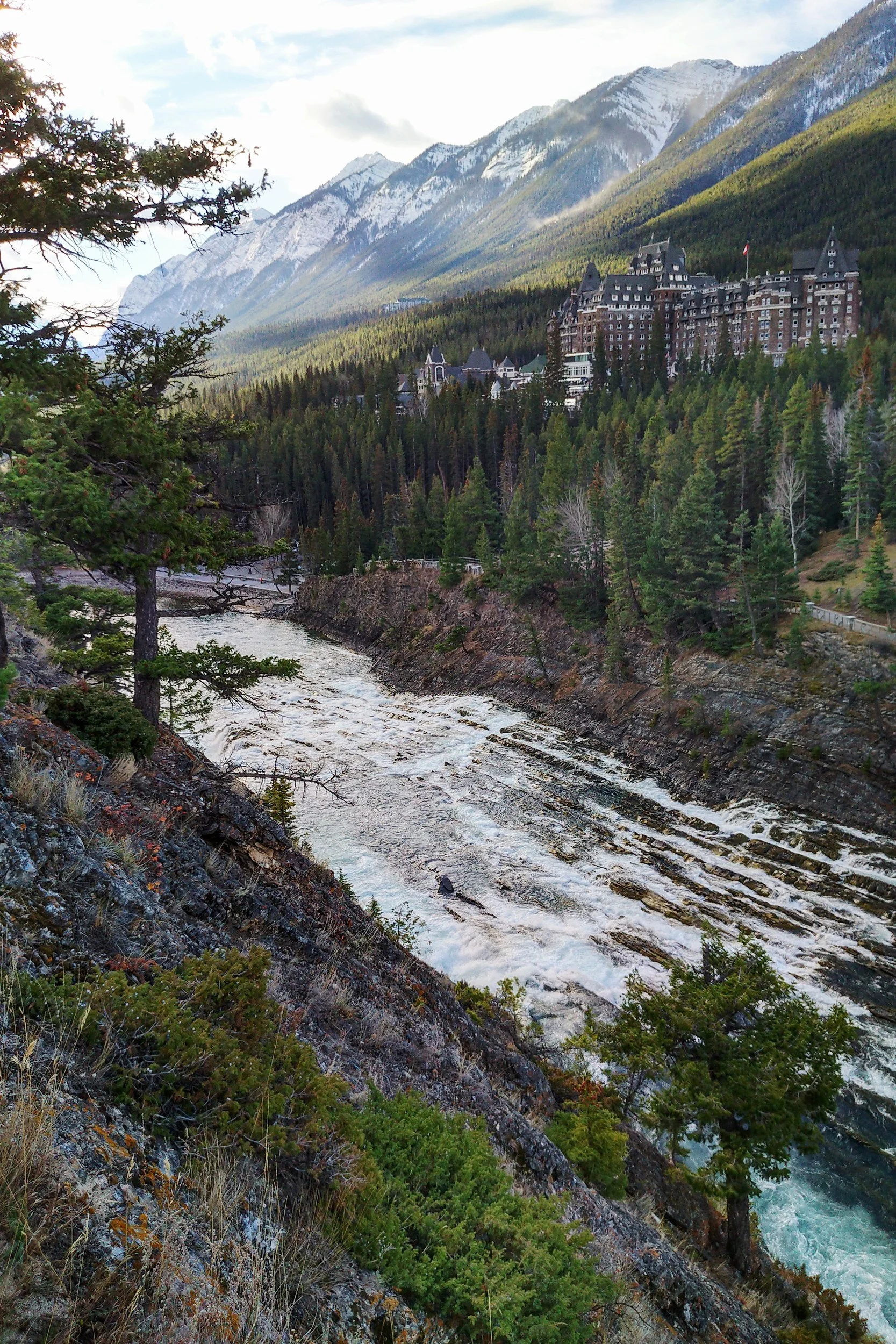
Figure 1: Surprise Corner on Tunnel Mountain, overlooking the Banff Springs Hotel. The Ranger Canyon Formation (foreground) is overlain by the Sulphur Mountain Formation exposed along the Bow River and Bow Falls.
Image credit: Charles Henderson
This field seminar will focus on Permian and Lower Triassic sedimentary facies, depositional history, sequence stratigraphy, and chronostratigraphy in a variety of proximal and distal marine settings. The field trip will examine outcrop exposures in the Front Ranges of the southern Canadian Rocky Mountains in the Banff, Canmore, and Kananaskis areas. Paleogeographically located along the northwestern margin of the Pangea supercontinent, these outcrop localities have been examined in detail at the Permian-Triassic boundary and provide information regarding the causes and effects of Earth’s greatest mass extinction. Participants will examine vertically and laterally continuous outcrop successions of the Sulphur Mountain Formation, the outcrop equivalent of the Montney Formation, one of North America’s most prolific hydrocarbon resource plays.
Permian strata in the region are punctuated by several unconformities within the Johnston Canyon and Ranger Canyon formations. The Lower Permian Johnston Canyon Formation is composed of silty dolostone with numerous nodular phosphate layers and distinct high-frequency lithologic cyclicity related to the Late Paleozoic Ice Age. The Middle to Upper Permian Ranger Canyon Formation is dominated by spiculitic chert and abundant phosphatic material. The Permian succession is thin (up to 35 m), related mostly to condensation as well as erosion. The region is interpreted as characteristic of strong upwelling, a mode of circulation sensitive to global climate change. During the latest Permian, this productive cold-water upwelling ecosystem was abruptly shut down. This is particularly well studied at the Opal Creek section, which was named Site 213 of the IUGS Geological Heritage Sites on November 6, 2026. It is regarded as North America’s most detailed biostratigraphically constrained geochemical record of the greatest Phanerozoic mass extinction.
The uppermost Permian to Lower Triassic Sulphur Mountain Formation is over 315 metres thick in the region, indicating tectonic reorganization and increased rates of subsidence in contrast to the underlying Permian succession. The outcrop in the field trip area preserves dominantly shallow marine (proximal offshore through shoreface) successions and distal successions including seismogenic sediment-gravity flow deposits (turbidites, debris flows, and fluidized flows). Marine facies of very-fine-grained sandstone to coarse siltstone display numerous tempestites and distinct refugia trace fossil assemblages that feature prominently in outcrops observed on this field trip. All outcrop exposures will be placed into a process-sedimentologic, paleontologic, and sequence stratigraphic context. In addition to the Permian-Triassic boundary, the Induan-Olenekian and sub-Spathian chronostratigraphic boundaries are well correlated in the region.
Stops include: Opal Creek section · Hood Creek section · Surprise Corner and Bow Falls · Mt. Norquay · Thunderstone Quarry
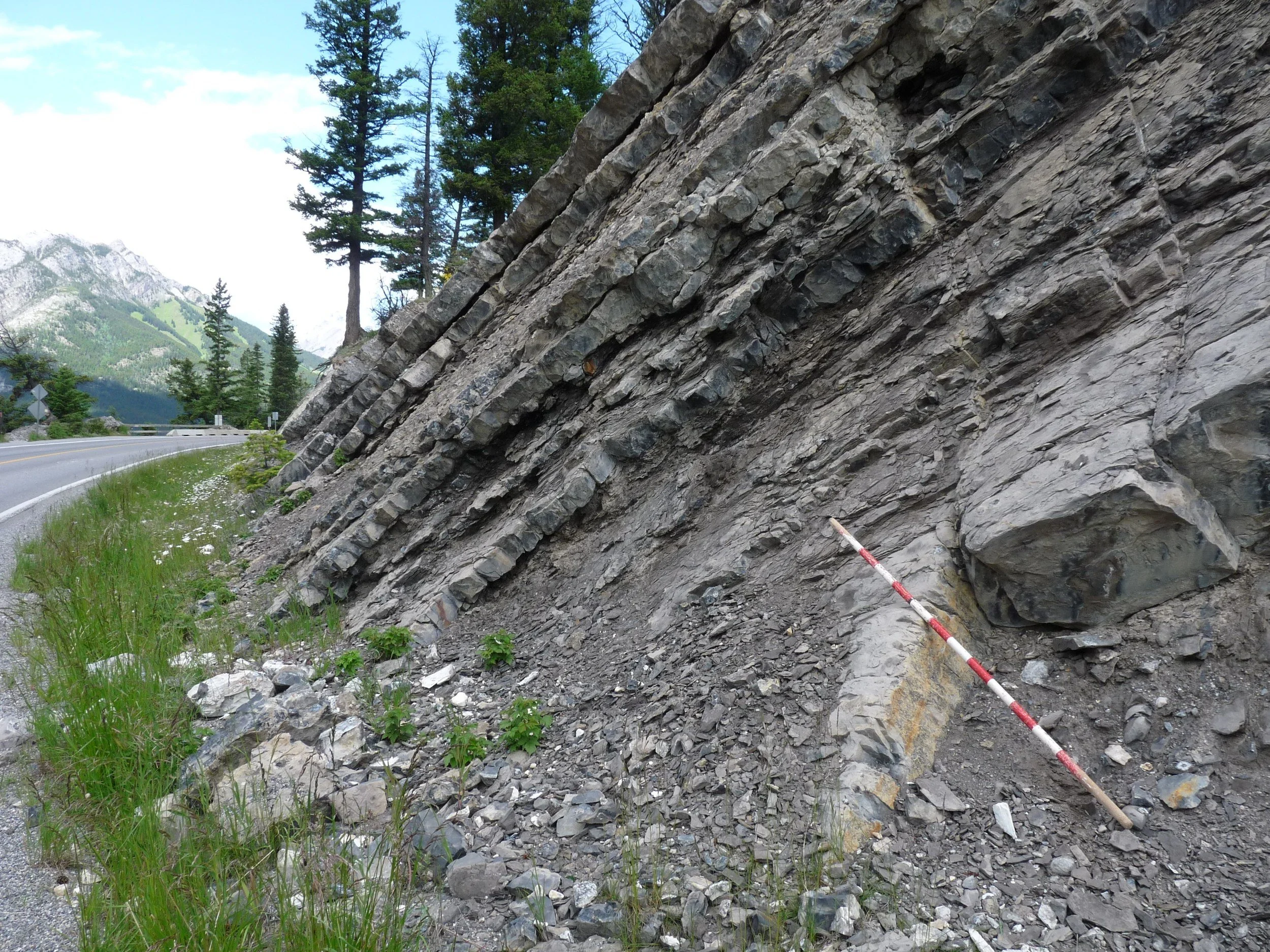
Figure 2: High-frequency cycles of the Johnston Canyon Formation at the Surprise Corner roadcut on Tunnel Mountain, Banff.
Image credit: Charles Henderson
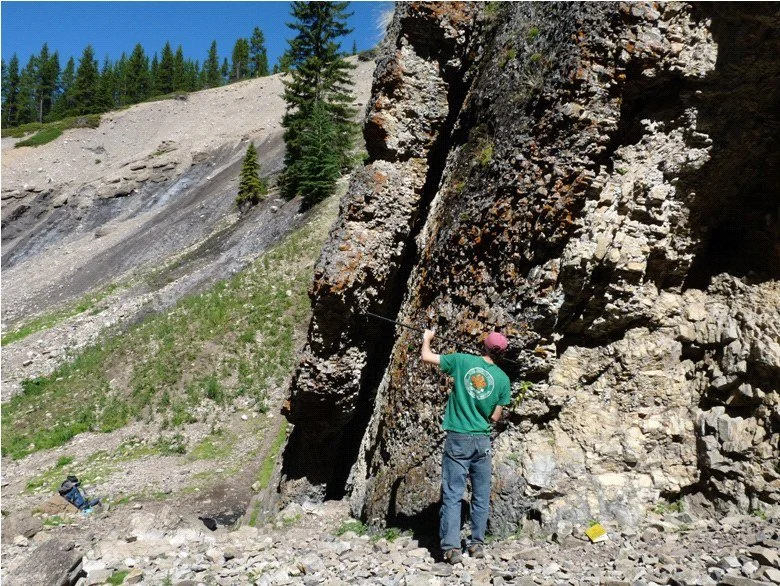
Figure 3: Contact between the Johnston Canyon and Ranger Canyon formations at the Opal Creek section, IUGS Geoheritage Site #213. The overlying black shaly siltstone is the Phroso Siltstone Member of the Sulphur Mountain Formation.
Image credit: Charles Henderson
Field Trip Leaders
Dr. Charles Henderson is an Emeritus Faculty Professor at the University of Calgary. He is internationally known for his conodont research and has worked extensively on the Permian and Lower Triassic around the world. He was the Chair of the Subcommission on Permian Stratigraphy and is the current Secretary-General of the International Commission on Stratigraphy.
Dr. Tom Moslow is President of Moslow Geoscience Consulting Ltd. and Adjunct Professor in the Department of Earth, Energy and Environment at the University of Calgary. He has won numerous awards and honours for his work and research, including the 2021 Stanley Slipper gold medal from CEGA. His current consulting work and research is focused on sedimentology of Triassic and Lower Cretaceous units in Western Canada.
Dr. John-Paul Zonneveld is a Professor and Academic Director of Research in the Department of Earth and Atmospheric Sciences at the University of Alberta, focusing on the interface between biological and geological systems. He has worked extensively on the sedimentology and paleontology of Triassic strata in Western Canada and is internationally known for his ichnological and sedimentological research ranging from the Permian-Triassic extinction to modern tidal systems.
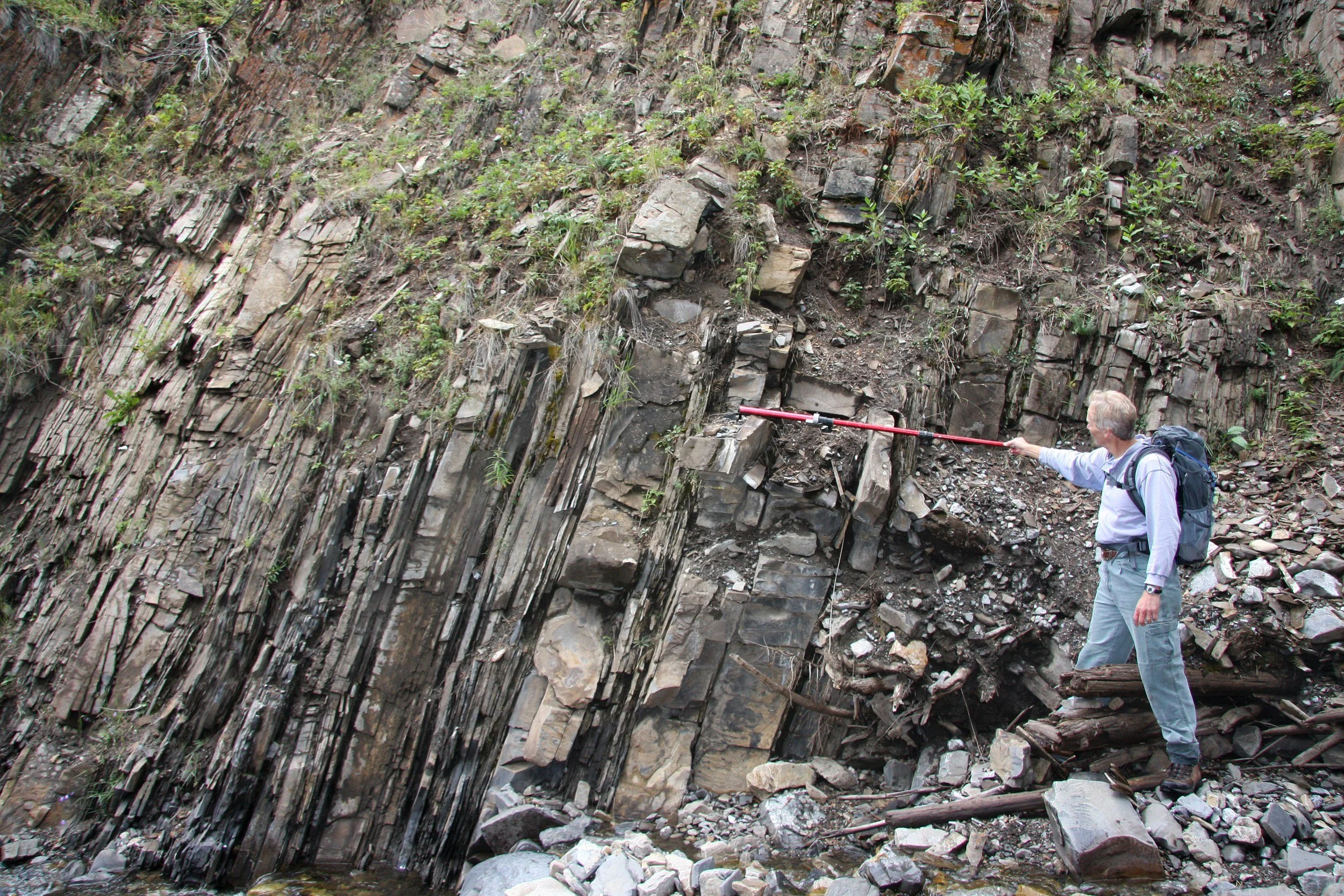
Figure 4: Hummocky cross-stratified sandstone in lower shoreface facies of the Lower Triassic Sulphur Mountain Formation (Tom Moslow for scale).
Image credit: J.-P. Zonneveld