
Trans-Appalachian Terranes of Nova Scotia, Canada
The Geology Beneath the Scenery
FT30 • 5 Days • Nova Scotia
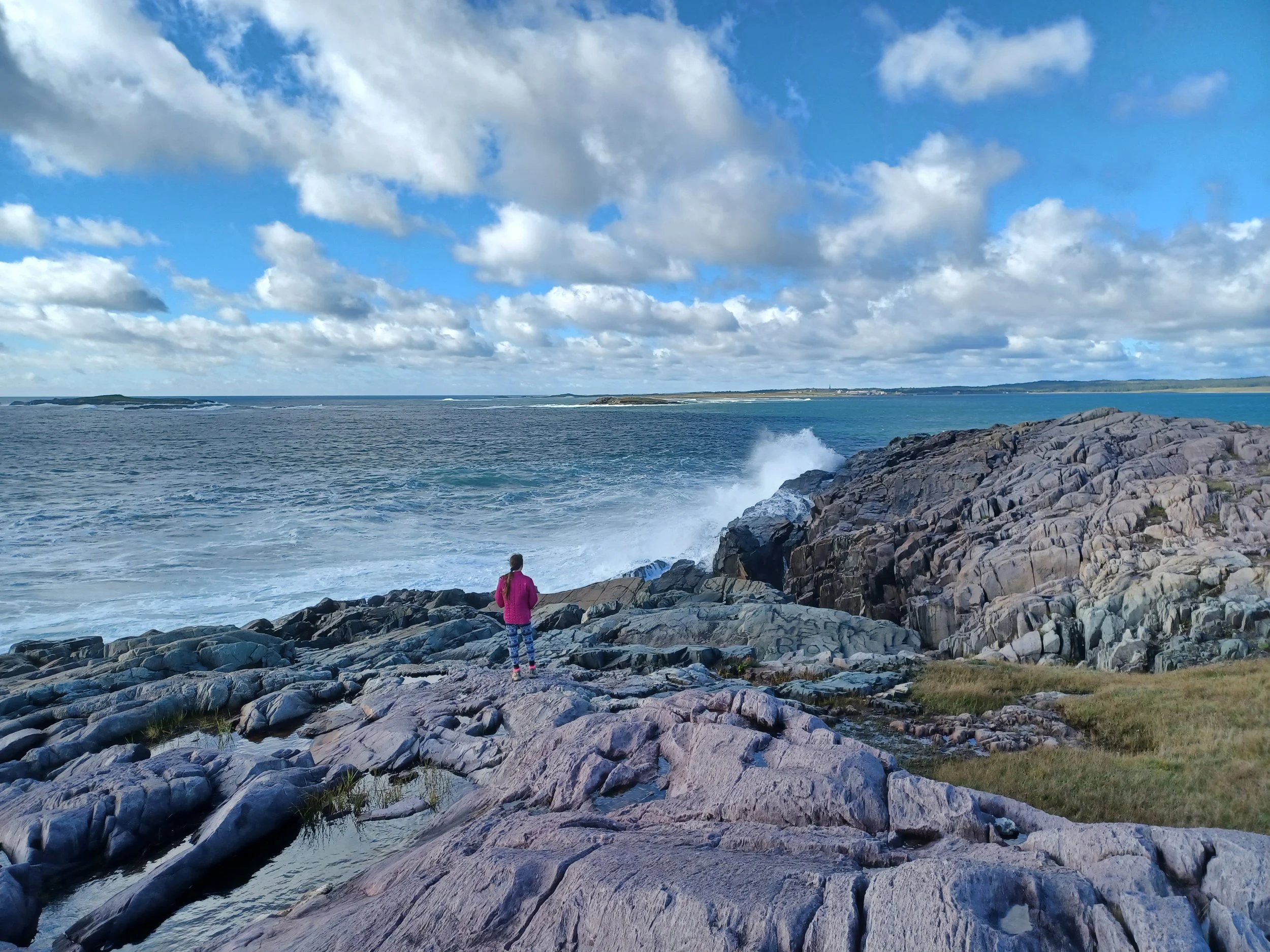
Lithic crystal tuff at the Louisbourg Lighthouse, Cape Breton Island
Image credit: Deanne van Rooyen
Nova Scotia provides a compressed cross-section of the Appalachian orogen from the Laurentian margin in the north through accreted Gondwana-derived terranes that are components of Ganderia, Avalonia, and Megumia in the south. The field trip will begin at the Stanfield International Airport in Halifax, Nova Scotia, at 9 am on August 20th and finish at the same airport by 5 pm on August 25th.
During the five days of the trip, participants will see outcrops representing the terranes that accreted to build the Appalachian Mountains and assemble Pangaea, as well as glimpses of the subsequent collapse and extension that formed the Bay of Fundy and present-day Atlantic Ocean. This geological history formed the spectacular scenery for which Nova Scotia is famous, including the Cabot Trail, Bras d’Or Lakes, and coastal vistas. Most outcrops are readily accessible via short hikes on trails or beaches.
Evenings in Chéticamp, Sydney, Truro, and Yarmouth will provide opportunities to experience the diverse cultural heritage and cuisine that make Nova Scotia a unique destination.
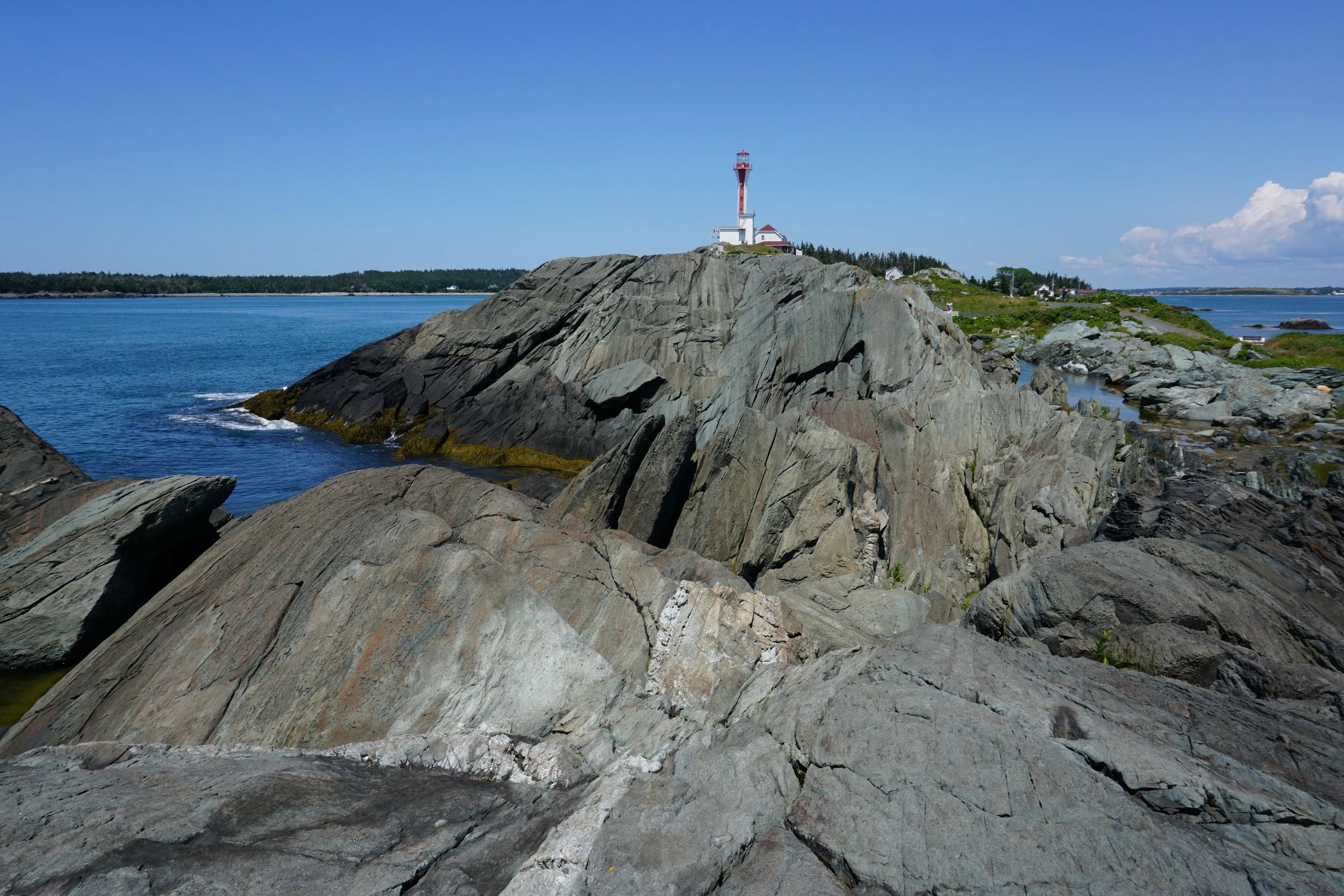
Silurian mafic tuffs at Cape Forchu, near Yarmouth
Image credit: Deanne van Rooyen
Field Trip Leaders
Sandra Barr, Deanne van Rooyen, and Chris White are based in the Department of Earth and Environmental Science at Acadia University in Wolfville, Nova Scotia. Their collaborative research projects and many co-publications are based on field-based observations, igneous, metamorphic, and structural geology, geochronology, and tectonics. Their research focuses mainly on the geological history of the northern Appalachian orogen, especially in Nova Scotia and New Brunswick. They have co-led many field trips throughout Nova Scotia.
Sandra Barr is Professor Emerita and has taught geology at the university for more than 50 years. She is a former president of the Geological Association of Canada and the Canadian Federation of Earth Sciences. In 2024 she received the Logan Medal from the Geological Association of Canada in recognition of her contributions to Appalachian geology. She has co-authored popular books on the Geology of Nova Scotia (2015) and Geology of New Brunswick and Prince Edward Island (2020), published by Boulder Books.
Deanne van Rooyen is the Head of the Department of Earth and Environmental Science at Acadia University. She is a past president of the Geological Association of Canada and the Atlantic Geoscience Society and holds multiple service roles in academia and the wider geoscience community. She was recognized recently as one of the “Fifty Under Fifty” top mid-career geoscientists in North America. In addition to her geological skills, she is a talented classical harpist.
Chris White is an Adjunct Professor at Acadia University and former senior geologist with the Nova Scotia Department of Natural Resources based in Halifax. During his career he has produced geological maps that cover most of Nova Scotia, and in 2014 he received the Canadian Provincial Geologists Medal, which is awarded annually in recognition of outstanding work at one of Canada’s provincial or territorial Geological Surveys.
Additional Field Images
Photos by co-leader Deanne van Rooyen. Select any image for a description of the geology shown.
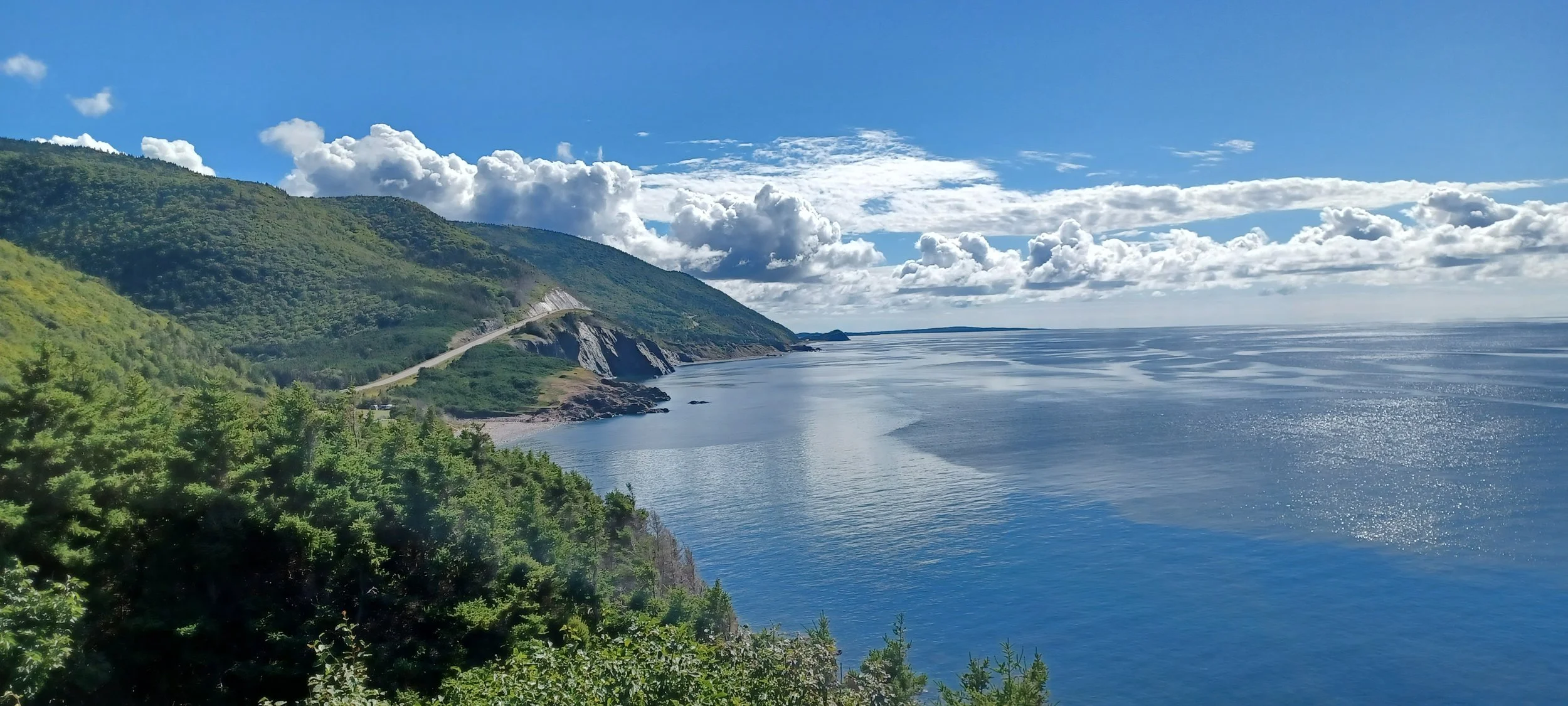
The Cabot Trail in western Cape Breton Island, Nova Scotia.
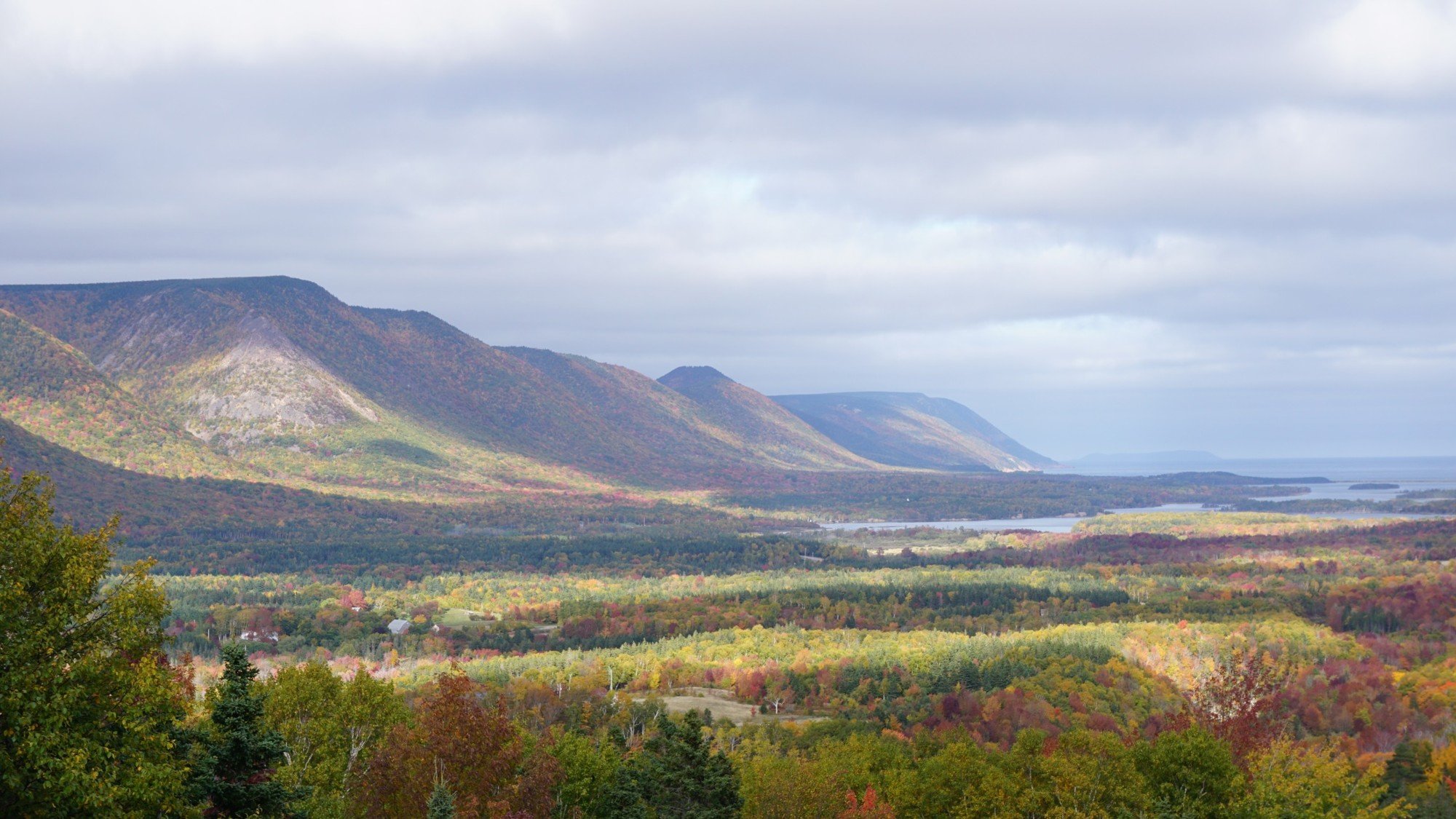
Looking northeast along the scarp of the Carboniferous and younger Aspy Fault. Offset of a raised beach along Aspy Bay demonstrates post-Pleistocene motion on the fault.
Lithic crystal tuff at the Louisbourg Lighthouse in Avalonian southeastern Cape Breton Island. The tuff is of dacite composition and has an age of about 570 million years. It formed in a stratovolcano in Avalonia. In the distance across Louisbourg Harbour is the restored French Fortress of Louisbourg from the 1700s.
In contrast to the tuff at Louisbourg in northeasternmost Nova Scotia, these mafic tuffs are at the southern tip of Nova Scotia at Cape Forchu near Yarmouth. They are Silurian in age and part of the Meguma terrane. They may have formed when the Meguma terrane was rifting away from Africa.
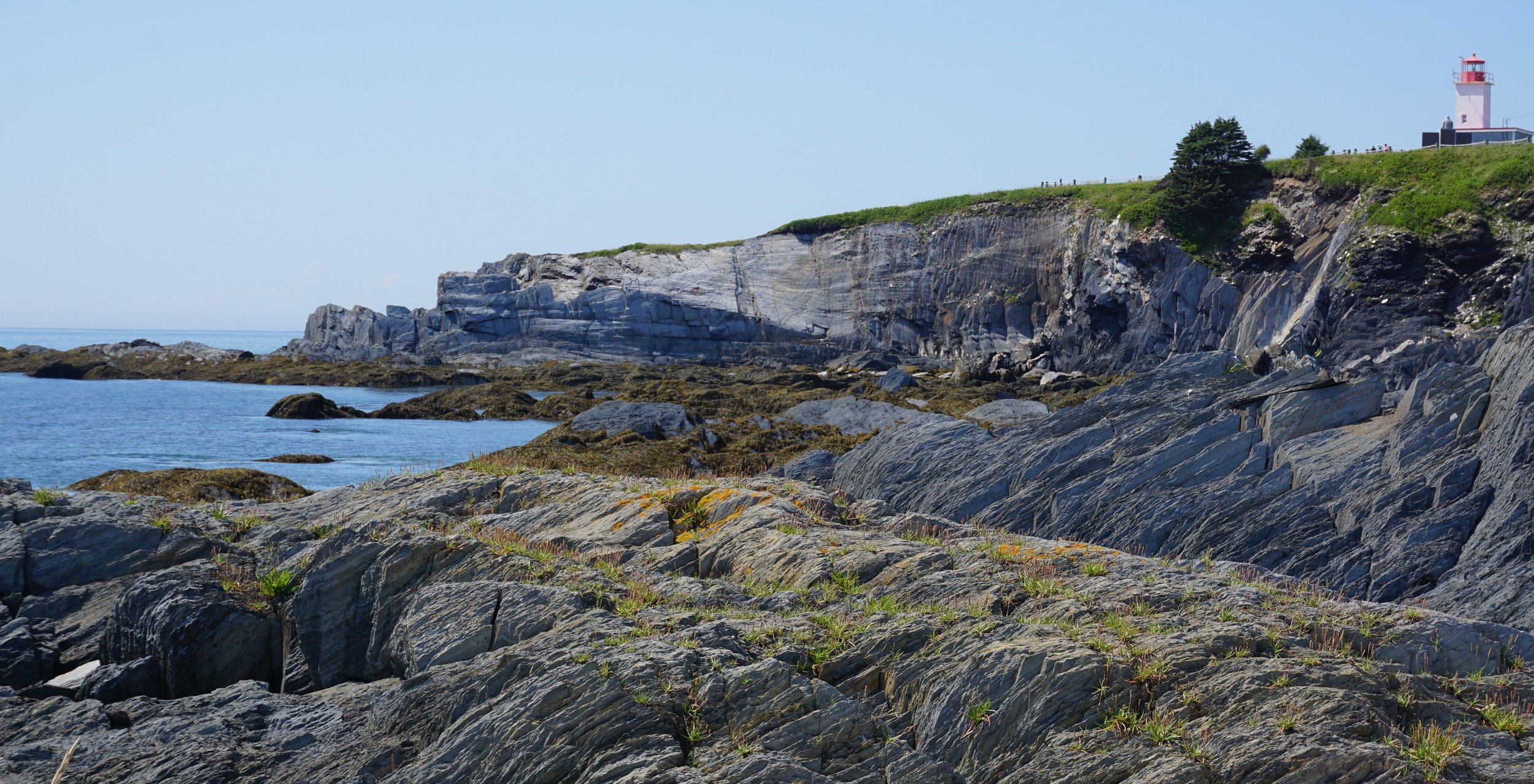
These interbedded slates and metasiltstones are in westernmost Nova Scotia at Cape St. Marys. They are part of the late Cambrian Halifax Group, deposited by turbidity currents on the continental slope and ocean floor of the Rheic Ocean.